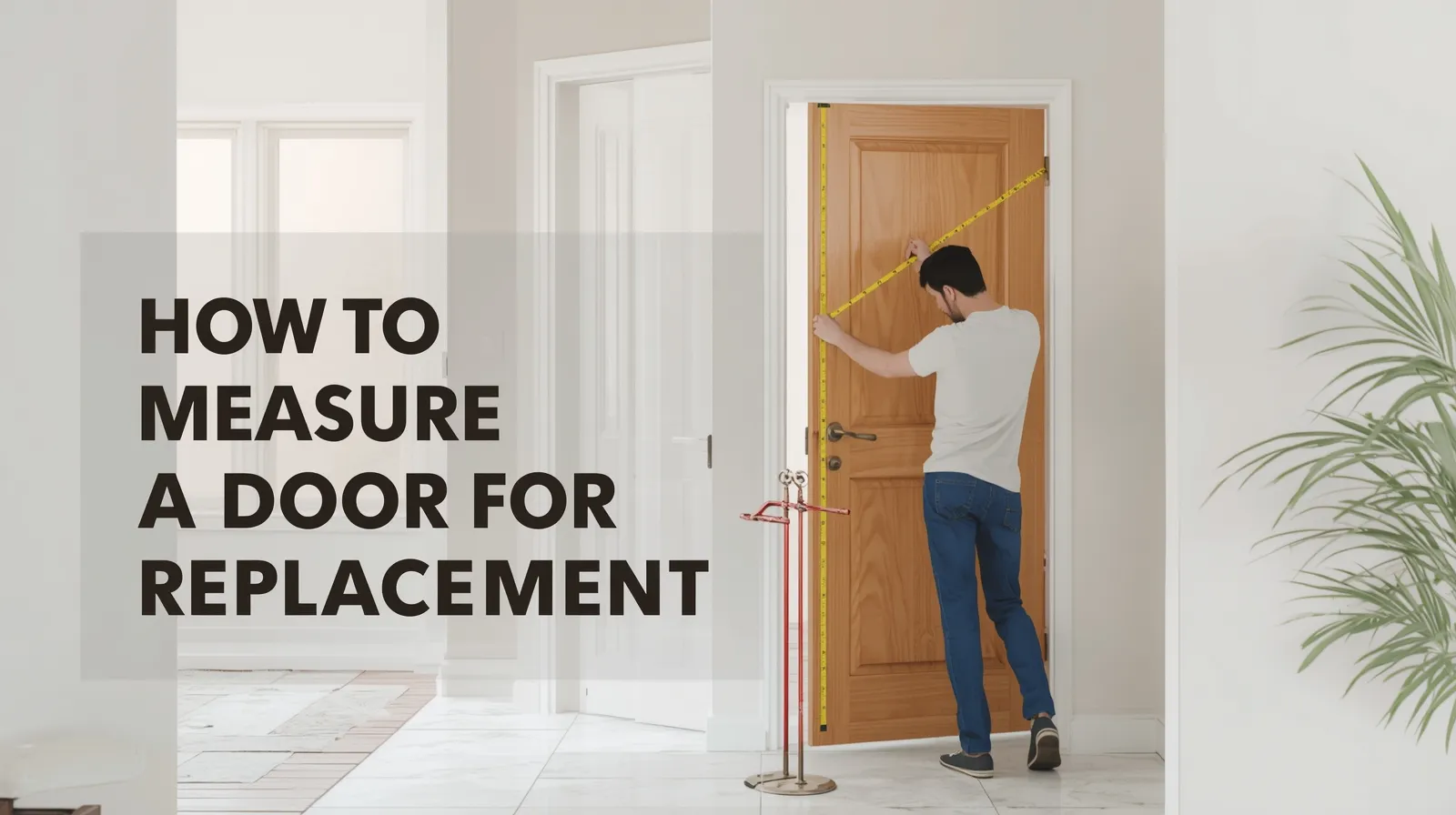
Measuring a door for replacement may sound simple, but many homeowners make mistakes that lead to wasted time and extra costs. The key is accuracy measuring width, height, and thickness while understanding the role of the frame. In this guide, you’ll learn exactly how to measure a door for replacement, including step-by-step methods, tips for avoiding common errors, and insights from professionals. With help from Capstone Windows & Doors, you’ll be confident your replacement project will turn out right the first time.
Door Measurement Made Simple
Replacing a door is one of the most common home improvement projects. Whether your old door is damaged, outdated, or no longer working well, a fresh replacement can instantly improve both looks and function. But before you can order a new door, you need to know its exact size.
Many people think they can just “eyeball it” or take a single quick measurement. Unfortunately, this often leads to trouble. A door that is even half an inch too big or too small can cause gaps, sticking, or drafts. Worse, you may have to return the door and start over.
This guide breaks down door measurement into clear, simple steps. By following it, you’ll save money, avoid frustration, and enjoy a door that fits like it was made for your home.
Why Accurate Measurements Are Essential for Door Replacement
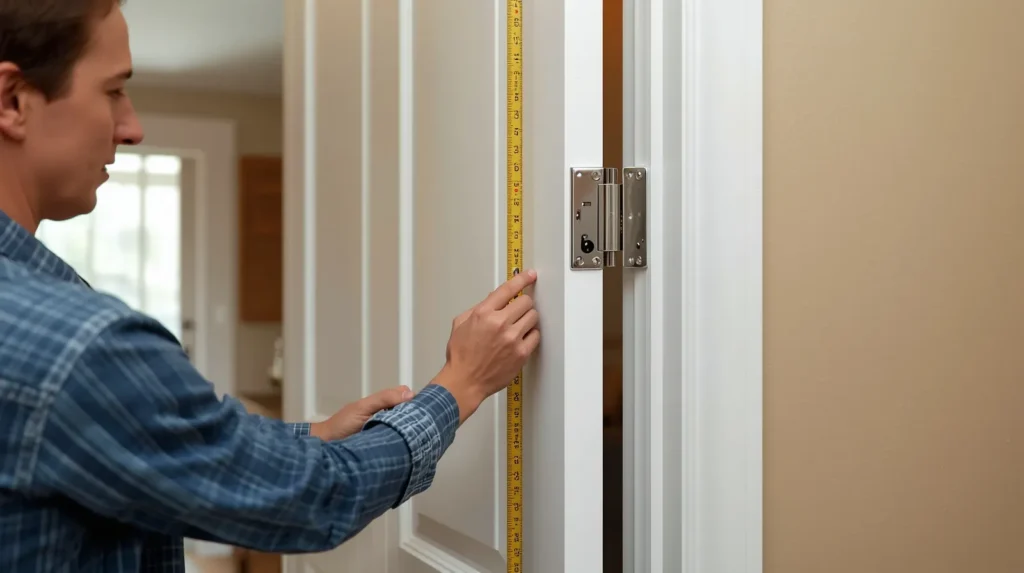
Think about how many times a day you open and close a door. Even a small misfit can quickly become a daily annoyance. Accurate measurements make sure:
- The new door swings open and closes without rubbing.
- There are no gaps letting in drafts or insects.
- Locks and latches line up properly with the frame.
- You avoid spending extra money on adjustments or returns.
Poor measurements can also affect energy efficiency. For example, if the door doesn’t seal tightly, cool air escapes in summer and warm air escapes in winter. That can raise your utility bills. By measuring correctly the first time, you protect your comfort and your wallet.
Understanding the Basics of Interior Door Measurement
When we talk about measuring doors, three numbers matter most: width, height, and thickness. But there’s more to it than just running a tape measure once.
- Width is measured from side to side. Because frames can shift over time, it’s important to measure at three points top, middle, and bottom.
- Height is measured from the top edge of the door down to the floor. Floors may not always be level, so measure both sides.
- Thickness tells you how deep the door is. Most interior doors are 1⅜ inches, while exterior doors are often 1¾ inches.
Along with the door itself, you need to consider the frame. The frame is the wooden structure that holds the door in place. If you’re replacing just the slab (the door without the frame), you measure differently than if you’re replacing the entire prehung unit. Knowing these basics will save you confusion later.
Interior Door Measuring Guide Tools and Preparation Steps
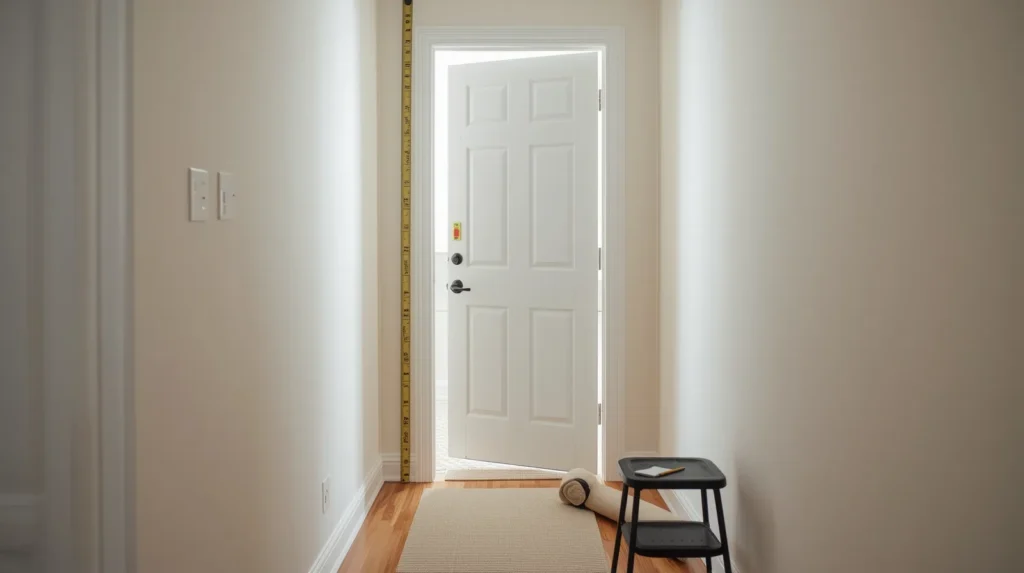
Before you pick up the tape measure, preparation matters. A little planning will help you avoid mistakes.
Tools you’ll need:
- Tape measure (25 feet recommended).
- Pencil and paper (or a phone app for notes).
- Level (to check straightness).
- Step stool (if the door is tall).
Steps to prepare:
- Clear the area around the door. Move rugs, mats, or furniture out of the way.
- Open the door fully so you have space to measure.
- Make sure the tape measure is straight and not bent.
- Take your time. Don’t rush accuracy is more important than speed.
This preparation ensures you get clear numbers you can trust. Think of it as setting the stage for success.
How to Measure a Door for Replacement Step by Step
The most important question homeowners ask is: How to measure a door for replacement? The process is straightforward once you know the steps.
- Measure the width. Place your tape measure across the door at three spots top, middle, and bottom. Write down each number. Use the largest measurement.
- Measure the height. Run the tape from the very top edge to the bottom on both the left and right sides. Floors are rarely perfectly level, so choose the larger number.
- Measure the thickness. Open the door and measure the edge. For most homes, interior doors are 1⅜ inches, while entry doors are thicker.
Tip: Always write numbers as “width x height.” For example, a door might be listed as 30″ x 80″.
This is the clear answer: to measure a door for replacement, you need the width, height, and thickness, written in that order. With these three numbers, you’ll be ready to shop with confidence.
How to Measure Interior Door Size for Replacement
Interior doors often vary, especially in older houses. That’s why precision matters. Here’s how to do it:
- Step 1: Width. Measure across the panel at three levels. If your frame is warped or uneven, this ensures you capture the largest possible fit.
- Step 2: Height. Measure from top to floor. If the floor is slightly sloped, use the longer side.
- Step 3: Frame opening. If you’re ordering a prehung door, measure the full inside of the frame (jamb to jamb and header to floor).
When you record your numbers, label them clearly so you don’t confuse width with height. A mislabeled number could lead to the wrong door size being ordered.
Tips for Measuring Interior Doors Correctly
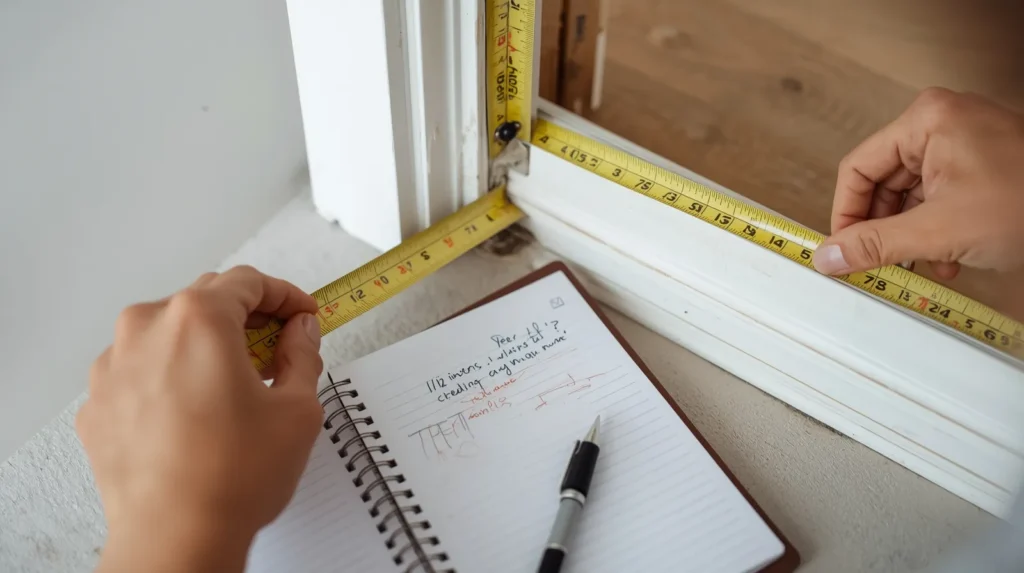
Here are extra tips to make sure you get it right:
- Measure twice. This reduces errors from misreading the tape.
- Always use inches. Door sizes are listed in inches, not feet.
- Round up. If you get fractions, round to the nearest ⅛ inch.
- Check both sides. Sometimes one side of the frame is slightly larger.
- Write clearly. Don’t trust your memory jot it down immediately.
Professional installers follow these same practices. By adopting them, you bring professional accuracy to your DIY project.
How to Measure Replacement Door Size Without Mistakes
Avoiding mistakes is just as important as the measurements themselves. Some of the most common errors include:
- Measuring only once and assuming it’s correct.
- Forgetting to check for uneven floors or warped frames.
- Mixing up width and height numbers.
- Not measuring the door thickness.
To prevent these issues, double-check each step. For example, if the top width is 30 inches but the bottom width is 29 ¾ inches, always go with 30. This ensures your replacement door won’t be too small.
Another mistake is measuring the old door instead of the opening. If the old door was trimmed or altered, it may not reflect the true size you need. Always measure the actual frame or opening whenever possible.
Measuring Interior Doors When Frames or Trim Stay in Place
Sometimes you don’t want to remove the trim or frame. In this case, your method changes slightly.
- Inside width. Measure the inside of the frame from one side to the other.
- Inside height. Measure from the top of the frame to the floor.
- Depth. Measure the jamb (the flat piece inside the frame) to match the thickness.
This approach is useful when replacing just the slab. It allows you to keep your decorative trim intact while still fitting a new door. However, it also means you need extra accuracy since you’re working within tighter boundaries.
Expert Door Replacement Guidance in Phoenix, AZ
In warm, dry climates, doors and frames may expand or shift slightly. Homeowners in Phoenix, AZ often face this issue. That’s why local expertise matters. A professional who understands the region can guide you in choosing the right material and checking measurements for long-term durability.
Capstone Windows & Doors specializes in this kind of service. They not only help measure correctly but also ensure the replacement matches your home’s style and needs. With years of local experience, their team gives advice you can trust.
Why Choose Capstone Windows & Doors for Your Replacement Project
When it comes to doors, precision is everything. Capstone Windows & Doors is known for accuracy, reliable service, and expert installation. Their process combines modern tools with real-world experience to guarantee a perfect fit.
By choosing professionals, you remove the guesswork. Instead of worrying about whether you measured right, you can rely on skilled installers who do this every day. A properly measured and installed door adds beauty, comfort, and security to your home for years to come.
Conclusion
Measuring a door for replacement is simple once you know the steps. Start with width, height, and thickness. Use a clear interior door measuring guide and remember to double-check your work. Avoid mistakes by measuring multiple times and writing everything down.
When you’re confident in your numbers, you can shop for a replacement that fits perfectly. And if you’re unsure, trusted professionals can take the stress off your shoulders. The first step toward a new door is always an accurate measurement get that right, and the rest will be smooth.
Want a door that looks beautiful and fits perfectly? Contact Capstone Windows & Doors today and let experts handle your replacement project with care and precision.